The Craft
Made the
hard way.
Every Reigi watch is designed, machined, decorated and assembled in the atelier in Jyväskylä, Finland. This page shows how — and lists the few things we don’t make ourselves. No one in this workshop counts hours. A watch is finished when it is right — not when the clock says so.
At the bench
Nothing that makes it a Reigi is ordered from a catalogue.
A watch can be assembled from catalogue parts in an afternoon. This page exists because ours aren’t — and because you shouldn’t have to take that on faith. Here is how an Octagon actually comes to be, stage by stage, with the same hands in every photograph.
Stage 01
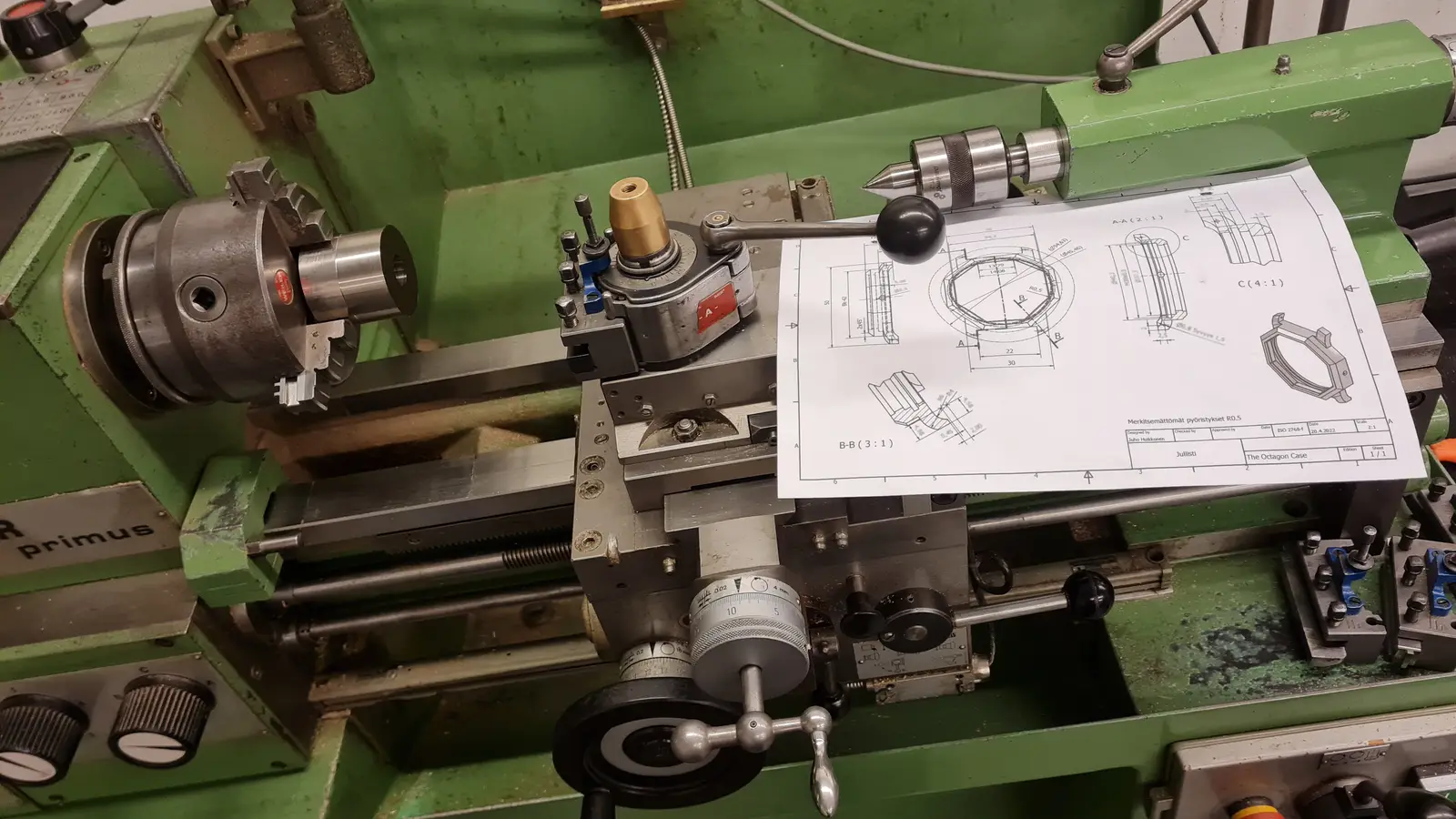
Design & engineering
Every component starts as a drawing — the case geometry, the 22-part dial stack, the modifications to the base calibre. Designing for one pair of hands is its own discipline: each part must be makeable, finishable and serviceable in this workshop, not at a factory.
Stage 02
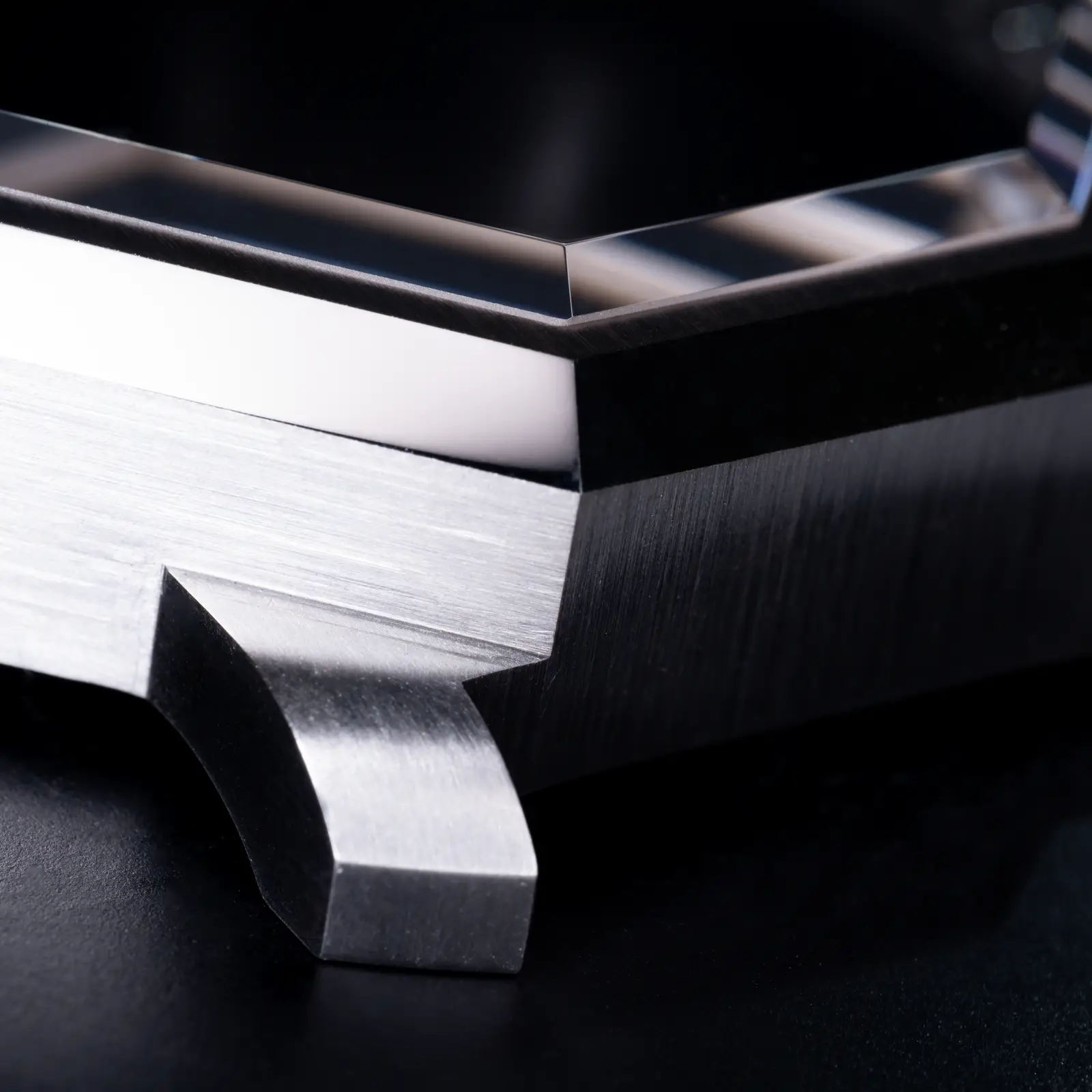
The case
The octagonal case is machined from 316L stainless steel, then brought to its final finish by hand: brushed surfaces pulled in one direction until the grain is even, polished bevels cut against them so the eight sides catch light in sequence. Steel forgives nothing; a single slip through a bevel means starting the surface again.
Stage 03
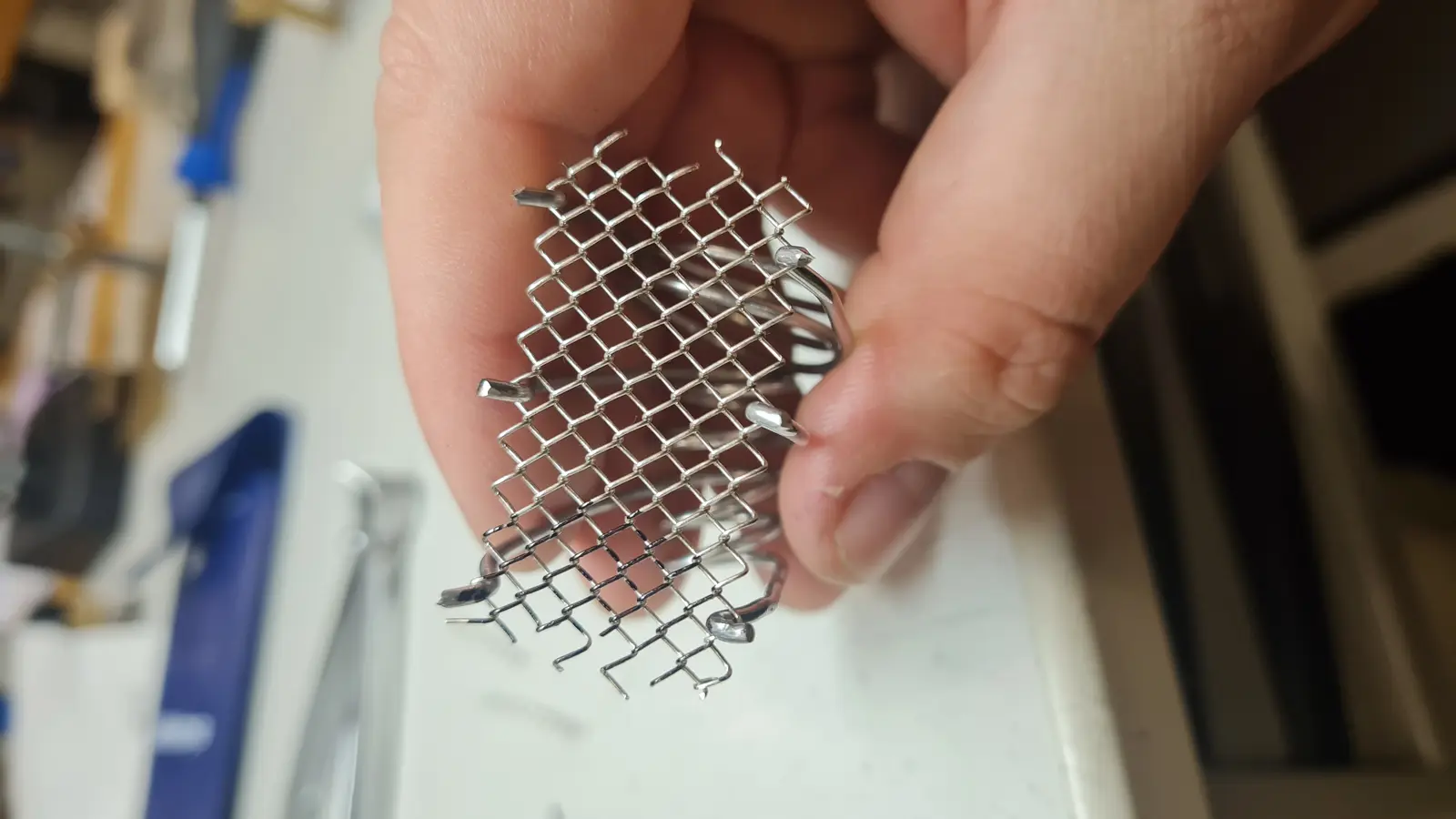
The dial — woven silver
The signature of the watch. Sterling-silver wire, 0.4 mm thin, is woven by hand into a mesh; the weave is tensioned, annealed, and set into the 22-part dial on its glass-bead-blasted, anodized aluminium ground. The work cannot be delegated to a machine — the mesh records the evenness of the hands that wove it.
To our knowledge no one had woven a silver mesh dial for a wristwatch before. It has become the face of Reigi, literally.
Stage 04
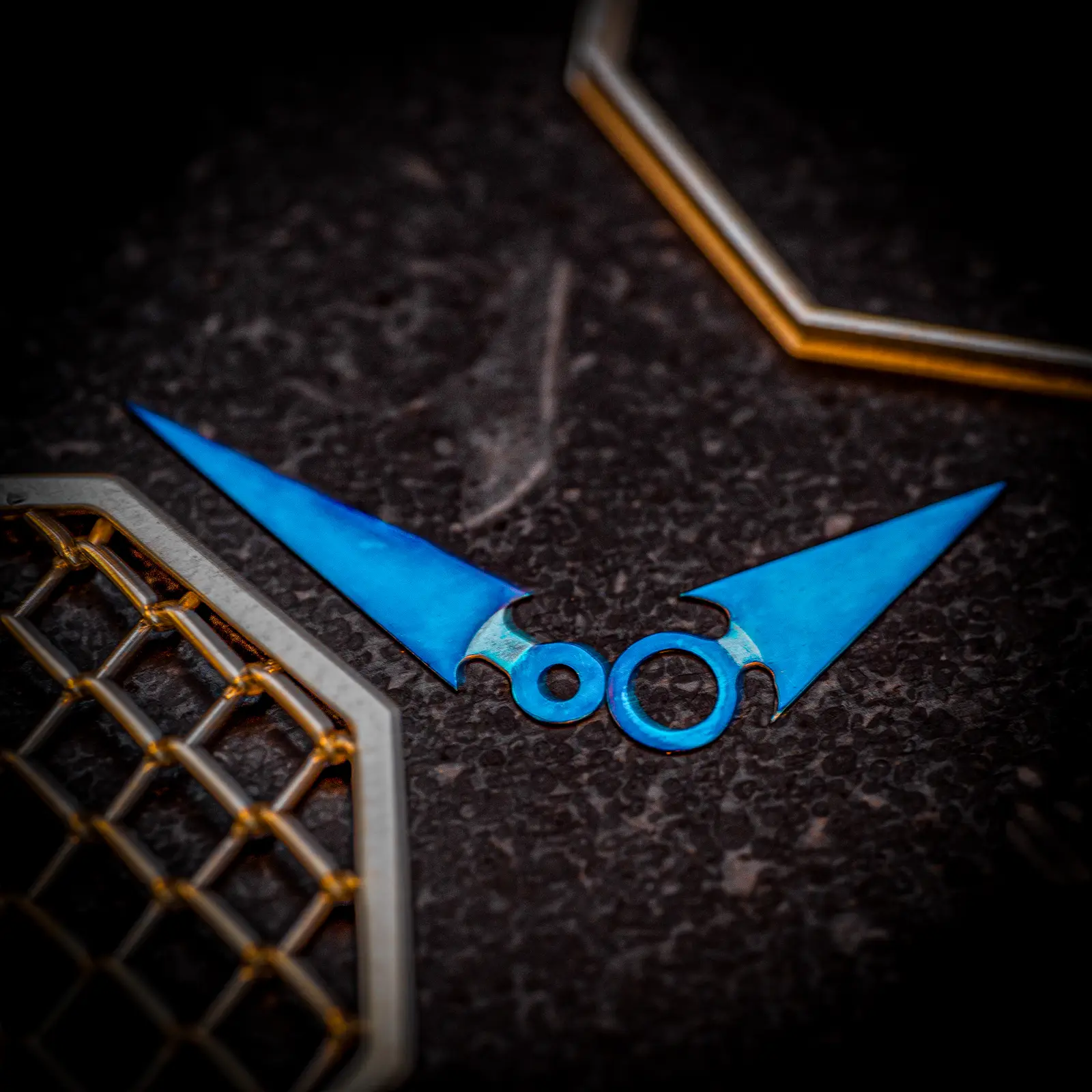
The hands
The hands are sawn and filed from carbon steel to 0.2 mm, then blued by heat — the old way. The steel passes through straw, brown and purple, and must be pulled from the flame in the narrow seconds when it turns a deep cornflower blue. The colour is not paint; it is the metal itself, changed.
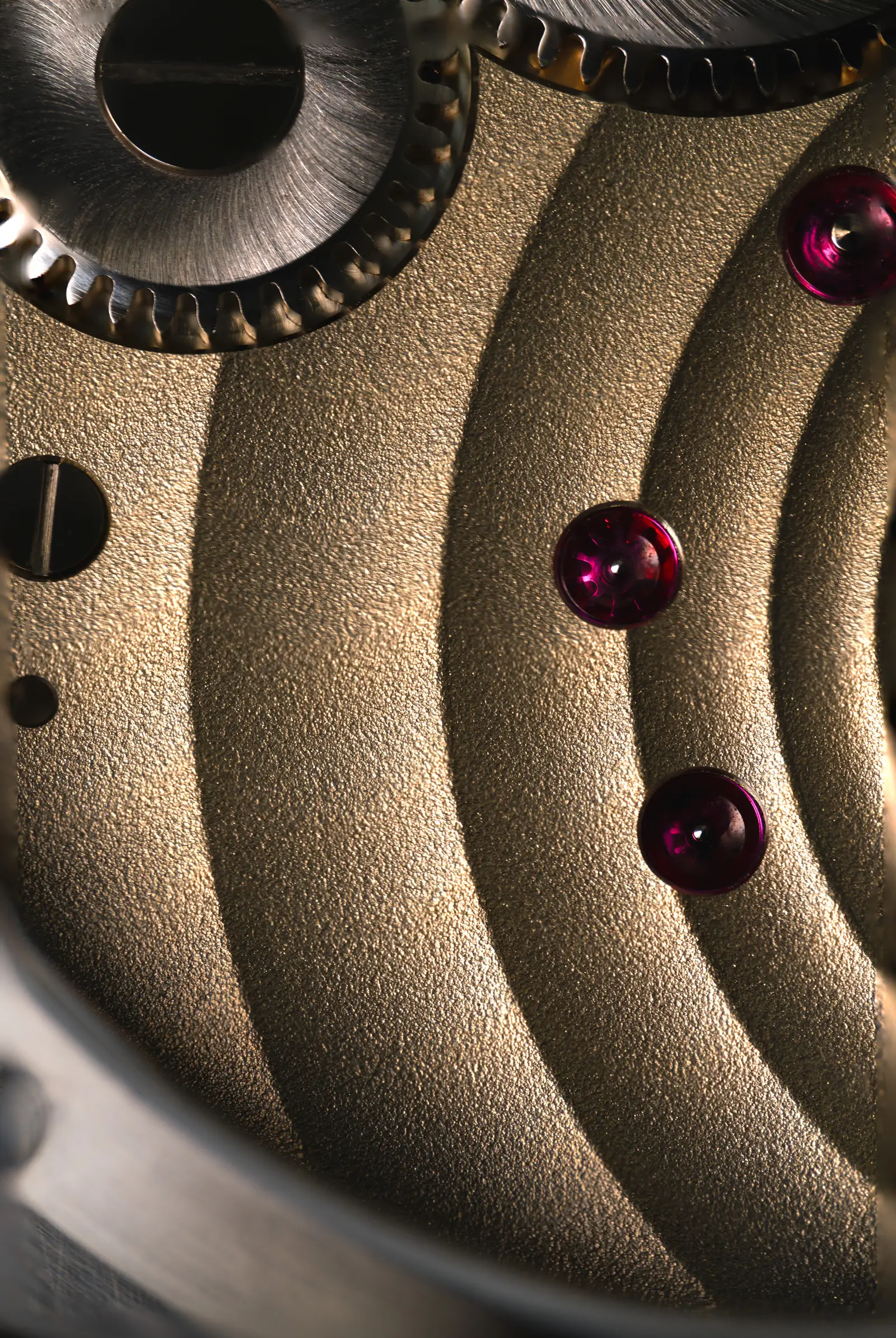
Stage 05
The movement — and the Rippling finish
We build on the Swiss ETA 6498, a manual-winding calibre with decades of proven service — then make it ours: stripped, modified, and refinished in-house. Its bridges carry the Rippling finish, a wave-form decoration we developed in this workshop. It exists nowhere else, and it is cut into the metal, not printed on it.
A proven base movement puts reliability where reliability matters, and the craft where you can see it.
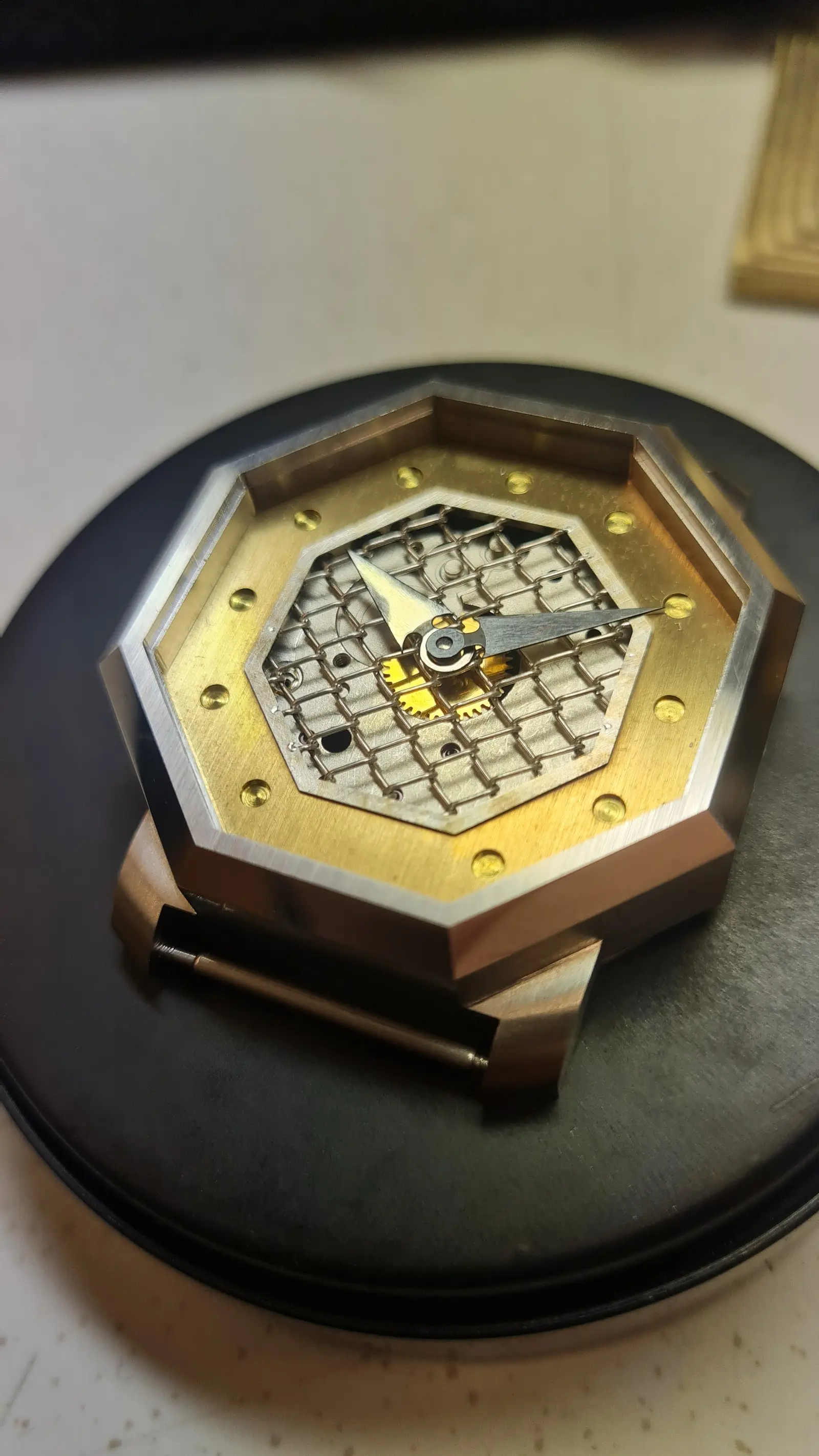
Stage 06
Assembly & regulation
Finally the watch is assembled, cased, and regulated — then worn, checked, adjusted and checked again before it ships. Every Octagon leaves with a five-year warranty and its first full service already included, because we expect to see it back in this workshop, once, before it needs anything at all.
What we make — and what we don’t
“In-house” is the most abused phrase in watchmaking, so here is ours in plain terms. What we don’t make ourselves, we say out loud.
Made at our bench
- Design and engineering of every model
- Case machining and hand-finishing
- The 22-part dial and its hand-woven silver mesh
- Hands: cutting, filing, heat-bluing
- Movement modification and the Rippling finish
- Assembly, regulation and final control
Said out loud
- Base calibre — Swiss ETA 6498, chosen for proven reliability
- Leather straps — handmade for Reigi by a Finnish leather artisan
- Watch boxes — made by a dedicated specialist
- Sapphire crystals and gaskets — bought from suppliers; that machinery does not exist in this workshop
More on why that list matters, and what to ask any maker for: what “in-house” actually means.
Commission
Begin the conversation.
Every commission starts as a message to Julli. A reservation of 50 % confirms the build — from that day, the watch taking shape on the bench is yours.
CommissionJulli replies personally — usually within a day or two.